Evan Rosa: From the Yale Center for Faith & Culture, this is For the Life of the World, a podcast about seeking and living a life worthy of our humanity.
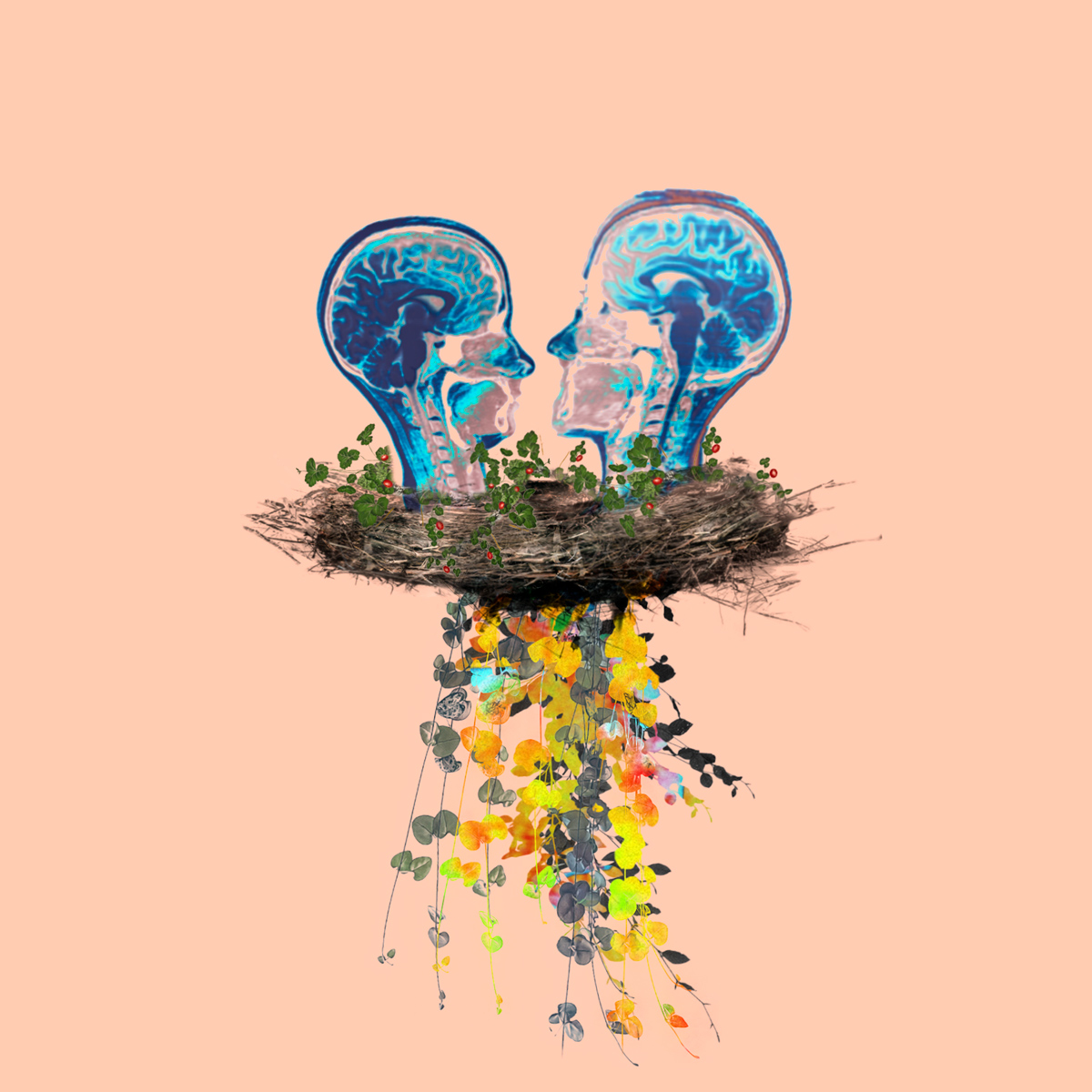
Liz Hall: Because of how intrinsically relational we are, the pathways to change are also relational. So the goal is relational. The pathways are relational. And what we're aiming for is not kind of a self-improvement project of little aspects of ourself that we're building up like a tower of Legos or something. But rather it's, we are enhancing our capacity to have a life of flourishing in relationship with God and others.
Todd Hall: The practices and seeking to develop virtues… It's not just to become a better person for the sake of being a better person, which often kind of reduces down to like, oh, that's gonna promote my own happiness. Hedonia. No, it's for the goal of deeper intimacy with Christ and union with Christ. Which is a loving relationship. Our agency operates completely inside the circle of God's love and action and is a response and a participation in the life and love of the Trinitarian God.
Evan Rosa: Human growth seems to just happen. A trajectory seems to be built into the lifespan. [The] genetic material at our conception, all of the caring and nurture thereafter, places us on some kind of trajectory.
Some people follow this trajectory like water follows the path of least resistance. Others seem to be motivated to a kind of growth toward optimization: not merely surviving through the lifespan, but thriving. My friend Pam King, for instance, sees spiritual health as a kind of growth toward wholeness, implying that one could finish the lifespan and yet remain incomplete. Not whole.
So how do people actually grow? Not just breaking a habit, not just managing a symptom, not placing a self-help Band-Aid on an existential wound. How do people become in a way that moves them into the kind of wholeness that we imagine when we think about what really makes life worth living?
Now, this episode is motivated by a project that looks at how Christian practices might help cultivate virtue. Not merely religiosity for the sake of religiosity, but the kind of practices that might inculcate human excellence. And, of course, the kind of practices that might induce the opposite. But to speak of virtue development, and to speak of habits and practices that might lead to those virtues developing, I thought I really need to know how people grow in the first place.
This line of thinking was present at the Martin Institute's Christian Formation Workshop, which gathered at Westmont College back in the spring of 2026, bringing together theologians, psychologists, philosophers, biblical scholars around a project called Practice Unto Virtue. [It] is formed in the conviction that Christianity is actually a way of life aimed at transforming people into the likeness of Christ. That vision of spiritual formation holds things like prayer, fasting, service, gratitude, solitude, silence—a long list of these—as somehow essential to the Christian life, and perhaps beneficial to forming virtues like humility, modesty, honesty, patience, courage, generosity.
And today's episode is embedded in the framework, or the structure, around these questions. If certain practices can lead to virtue, well, how do people grow anyway in the first place? And is virtue the point of growth at all?
My guests are Liz Hall and Todd Hall, both of Biola University's Rosemead School of Psychology, friends of mine, and clear voices who are both working on the integration of psychology and theology. And they emphasize together that virtue alone is not the telos of spiritual growth. The goal, they say, is intimacy with God, a kind of union with Christ. Practices, and whatever virtues they might lead to, matter because they grow out of that union and make more room for it, support it, make it more plausible, make it more secure.
As psychologists, Liz and Todd both draw on attachment theory, interpersonal neurobiology or affective neuroscience, [and] psychological research on meaning-making and post-traumatic growth: whether suffering can lead to growth at all, or whether people grow in spite of suffering. But their pursuit of psychological questions runs deep alongside their Christian theological commitments. Last year, they wrote a book together, Relational Spirituality: A Psychological-Theological Paradigm for Transformation. This year, Liz also released a book, When the Journey Hurts, co-written with Kelly Kapic and Jason McMartin.
In this episode, we unpack a relational account of human transformation: how we're formed in relationship, grow through relationship, and relationship is the endpoint toward which growth is headed. We discuss implicit knowledge, or unconscious, gut-level knowledge; how emotions in our bodies interact; why willpower and spiritual highs or intellectualizing or spiritually passing off all of your agency to God so often leave a deeper layer of ourselves untouched. We also look at the question of growth through trauma and suffering, considering Eleonore Stump's perspective on sin as a kind of inner fragmentation, or Gordon Smith's picture of human agency as nested within God's love.
So special thanks to Steve Porter and the team at the Martin Institute for Christianity and Culture at Westmont College, as well as the Templeton World Charity Foundation, which helped to fund this work. And thank you for listening today. Hope you enjoy.
Evan Rosa: Liz and Todd, my good friends, thanks for joining me on the show.
Todd Hall: It's great to be here. Thanks for having us.
Liz Hall: Really great to be here.
Evan Rosa: I was introduced to each of your work through the lens of integration, the idea that theology and psychology could be integrated, and the idea of these two disciplines coming together to then offer insight or practical application to so many forms of life, I just immediately gravitated towards it.
As you have spent so many years doing the kind of thinking and research that you have, what are your ultimate ends? Like, what do you see as the goods of integrating theology and psychology?
I wanna start big and then we're actually gonna drill down a little bit more.
Todd Hall: It's a big, big question.
Liz Hall: Well, one of the things that I would say is that if we're interested in understanding the person well, then it's a really great idea to look at all of the sources of information that we have about the human person and try to pull them together. So certainly psychology is a really powerful tool for doing that.
But for those of us who are believers in Jesus, then there's also this source of information about the human person that is our Bibles. And so the idea is that if we're able to weave those two together, we come out with a, just a much more comprehensive picture of what the human person is all about.
Todd Hall: Yeah. That's one of the foundational discussions we start with our students is, yeah, just should we bring these two disciplines together? And we believe that we should, and that's—yeah, our view is that it's helpful to bring psychology in a conversation with theology to lead to a more holistic, unified picture of human nature and spiritual growth, sanctification, as well as mental health and healing, within a psychology context. And then beyond that, there's a whole discussion of, okay, how do you bring them together? What roles do they play? That sort of thing. And so there's, that's a, that's also a big question, a big discussion, but I think in some ways theology is foundational for kind of setting the scope for what the good life means from a Christian perspective. And psychology helps to flesh that out in a lot of ways.
So that's what, that's what I'd say in terms of a kind of big picture, but there's a lot of nuance to how they interact.
Evan Rosa: Yeah, there's a kind of normativity that theology or in some cases philosophy might bring to the question of what it is to flourish in life, what it is to have a good life. I specifically wanted to talk to you both about change. And here with respect to change, there's all sorts of metaphors and there's the life-is-a-journey metaphor, and I think that's apt and fitting for each of the work that you have done.
I think it's a really helpful way of course, to be describing it, especially in light of, all the hype about The Odyssey that recently came out, you know, life is a journey. We're learning that through Odysseus and something deep in the human psyche is there. I wanna start with like what it means to change and I want to hone in on particularly character change, spiritual or mental change. Todd, you referred to, like just the treatment of mental illness. But beyond treatment of mental illness, there's also plenty of desire to do optimizing kinds of things as well. How would you frame this concept of change so that we could kinda add some definition?
Todd Hall: So I think one helpful distinction is, sort of levels of change. Some people refer to these as, first order and second order change. But there's, so there's change at the level of symptoms. You mentioned mental health, right?
So that's a lot of the mental health field focuses on symptoms, which is important and helpful. But I think, I think from both Christian theological perspective, as well as a lot of the best psychology that is informed by the importance of relationships, relational psychological theories—I think [there's] convergence suggesting that there's a deeper level of change that we're really after, ultimately in terms of sanctification and also in terms of psychological growth.
And so that gets to this kind of first order change. And that gets to what we think of as what I, what I call implicit relational knowledge. And that's a term used in kind of psychoanalytic theory. So it's this deeper layer of knowing in terms of how relationships work and how life works.
And I think that's an important distinction and something that we're really aiming at in a lot of the work that we do.
Liz Hall: I would just jump in to agree with Todd that I think sometimes when we talk about change in terms of what, in the Western world, we consider just different aspects of ourself. Things like isolated character strengths or virtues or that kind of thing. We are missing the boat a little bit because when you start thinking about them, most of these are things that are important because they influence the way that we do relationships with others.
And so, when you think of it that way, relationships really are the context for that, and what we're aiming for is not kind of a self-improvement project of little aspects of ourself that we're building up like a tower of Legos or something. But rather we are enhancing our capacity to have the kinds of relationships that we're given a vision of in terms of our theological commitments of a life of flourishing in relationship with God and others.
Evan Rosa: One thing that comes to mind as you both are, describing this, is it does seem that most of life, most of human experience is sort of built on the, this sort of this ocean of change, right? It's just constant change. It's constant development throughout the lifespan. And so I think to dive in even more narrowly, I'm fascinated about the desire to control the change, right?
Like to inculcate particular virtues or to treat particular mental illnesses or to foster a particular kind of better relationship that seemed so desirable. Speak to the control side of that equation. Like what? Like what do you, what do you make of that control controlling change?
Liz Hall: I think there's definitely things that we can do to put ourselves in the path of life experiences that will change us.
We can think about this both from a psychological, the psychological side of things, where now, with the advent of positive psychology, there's all kinds of ways of inculcating whatever character strength we're interested in.
You know, the ways of intentionally cultivating gratitude, for example, by doing exercises where you write down five things you're grateful for at the end of each day. And certainly on the spiritual side of things, there is a long history and, abundant evidence in the New Testament that we're called to practice spiritual practices.
Where again, I think the purpose there is to put us in the way of the types of things that we'll be able to alter our character or, as we like to say grow us toward more toward Christ-likeness. So on both sides of the equation there's this idea that certain activities, engaging in certain activities facilitates change and growth.
Todd Hall: Yeah. Speaking to the control aspect, I think at a general level, it often is a way to cope with anxiety—just life in general—and also emotional pain that gets triggered and anxiety is our mind and body's way of telling us that it predicts something threatening might happen.
And so to be on the lookout for that, and so oftentimes, when we're experiencing emotional pain and difficulties, we—to put this in kind of the spiritual formation context—we often co-opt the mechanisms and the habits in order to control. And that's really, what we would call in psychology, defense mechanism.
And so I talk about several of these in some of my writing. So, like, the Nike approach: just try harder, right? And this is something that,
Evan Rosa: Just do it. Yeah.
Todd Hall: just do it, right? It's, I would say it's not often explicitly preached in the church, but oftentimes what we hear in church settings is not a lot about the process of change and how this works.
And so this willpower approach is implied: well, if you just try harder, you know, you'll be able to grow. But under the surface, oftentimes that's, again, it's an, it's a motivation to control and protect against anxiety and emotional pain. Other ones I talk about—other kind of, I call these misguided approaches to spiritual growth—spiritual high approach, right?
We're seeking some sort of spiritual high to avoid pain, right? Or the intellectual approach. We're seeking knowledge, which is good. These are all good in and of themselves, but when it's motivated to control and protect against pain, the problem with that is it cuts us off from ourselves and from other people and from God in relationship.
Evan Rosa: And I don't want you to leave out the spiritual bypass approach either, because that one was sort of handing off. It's a, it's a sort of I maybe repression or suppression of some kind.
Todd Hall: Right, right. Yeah. That's another one, right? Spirit that, yeah. That term is used often by a number of people I've seen, so spiritual bypass is just sort of, handing something off to God in a sense, in a very sort of passive way. And again, it's so depending on God is good, right? But the issue here is the motivation underlying it, which is to shut down pain and avoid it.
And the problem again is that the byproduct of that's not necessarily intended, but it's a byproduct of that, is it cuts us off again from our own internal world, our own emotions, with God and others.
Evan Rosa: And you say none of them hit the implicit level. And so I think it's an opportunity for us to sort of talk about what is going on at the implicit level, how you got there in the first place. And I think this kind of is going to push us into the journey metaphor and that we're taking stock of our starting place and the story that we all have when we begin to realize that, oh, some kind of change may in fact be required.
I need to embark on this journey. I would love to get both of you talking about what is happening at the implicit level and to speak psychoanalytically and to speak about, what is the theory of the person underneath it all, so to speak. That is, that is sort of the starting point.
Todd Hall: Yeah.
Evan Rosa: I'm so fascinated by it.
Todd Hall: Yeah, definitely. Yeah. Liz, do you wanna jump in or do I have
Evan Rosa: We could hang out on this for a… as well?
Todd Hall: Yeah, there's a lot here.
Liz Hall: Yeah, I mean, I'll bring up just the very basic point that maybe you can elaborate on, Todd, but that I think the big insight of some of the relational approaches is simply this insight of how profoundly relational we are. Again, trying to get away from that model of it's us as kind of this individual set apart from others. And because the ways that we are influenced and shaped by others it often occurs before we're able to reflect on it. A lot of times we kinda wander through life just assuming that our reality is just the way that things are. And it's not until we bump into other ways of doing it or have profound encounters with other people, that we might start thinking, oh, maybe there is another way.
Right? When certain dynamics are able to come to the surface and those are real opportunities then to grow and change. Motivation, of course, then becomes very, very important. I think one, you know, I talked about intentional practices, but not just why you engage in the practices, but what you think you're doing when you're engaging in the practices makes a big difference.
Are the practices avenues for relational encounters with God and others, or are they, like I said, a form of self-improvement project where I'm trying to pull myself up by my own bootstraps in this kind of controlling way that Todd alluded to earlier.
Todd Hall: Yeah, that's, and I'll just add to that to your question, Evan, about sort of like yeah, human nature and how do we change and how does the implicit level sort of speak to this?
So a term I like to use oftentimes is the idea of the implicit self. So this goes to a, fundamental distinction between different ways of knowing, which we've already alluded to and talked about a little bit, right?
That there's this kind of deep implicit gut level, relational way of knowing, particularly in relationships. It's stored in our emotions and our bodies, right? So there's, and there's a lot of neuroscience and, you know, research that kind of backs us up now. So that's one thing that's been fascinating in the past, you know, handful of decades that was not something that was really visible 30 years ago, even though we had some knowledge of it from clinical work, but there's, actually neuroscience research on this now that there's…
Evan Rosa: Are you thinking of, like, interpersonal neurobiology and…
Todd Hall: Exactly. Interpersonal neurobiology and affective neuroscience as a whole, you know, related field that didn't exist 50 years ago. I mean, so that's the whole study of, how does the brain process emotions, right.
And so we now know there's there's different types of memory and there's different components to emotion and memories are there, are these implicit kinds of memories or knowledge are stored in this gut-level, implicit kind of memory—or relational experiences and the emotions that are, you know, related to them are stored in this gut-level type of memory. And so then that leads to what I call the implicit self. And that's really what drives how we actually relate and how we live out of our story. You know, you mentioned that. Or, you know, so another way to say it is, the fundamental way that we relate to God and to others is not completely under our conscious control. And so that means the level that change needs to happen at is this implicit level because it operates outside of conscious control and it moves us and shapes it, shapes how we perceive relationships outside of our conscious awareness, right? So, and this is where attachment theory has a big role and helps us understand attachment relationships. And so when we have, for example, insecure attachment experiences, which we all do to some extent or maybe even, deeper wounds or trauma, that really shapes our gut level knowledge of how relationships work for us.
And it's based on our past experiences, right? So if I grew up with a dad that's controlling and maybe abusive—to use a more extreme example—that shapes me to learn at this sort of gut level, like, oh, this is how, this is how relationships work with important people in my life, and especially authority figures and maybe especially men.
So then when it comes to relationships with other male authority figures, it's not a conscious operation where I'm saying, oh, this is how this is gonna work. Right? It's, so, I call them attachment filters. It's just operating automatically, subconsciously, this is what's gonna happen in this relationship.
If I open up, this person's gonna be controlling or emotionally abusive or whatever the case may be. And so that expectation, which is implicit at a gut level, which is related to what I'm calling the implicit self. That's what needs to be changed, and that only happens through new relational contrast experiences.
Evan Rosa: Relational contrast experiences is good. I'm for both of you. When you use the term implicit or attachment filter, and it's like this sort of reference to that, which is experientially given, it might not, I don't mean to refer in any sense to some sort of stable genetic kind of thing that might be there and perhaps that does have some part to play.
But is that a stand-in for the word unconscious? The unconscious implicit?
Todd Hall: Yeah, it's, it does overlap a lot. Yeah. It's the, it's operating outside of conscious control. Sometimes it's subconscious, unconscious, or it might be kind of at the border of consciousness, but it's definitely not something that's operating consciously. Yeah, some people refer to [it] as non-conscious, so there's kind of a distinction in psychodynamic theory.
They refer to the unconscious in some ways as things that are, that we're not aware of because of defense mechanisms. So we've repressed these things, right? That's one type of unconscious. But there's another that some people refer to as non-conscious, which is just there's, most of our brain functioning is operating at a non-conscious level, right? We don't, we're not consciously evaluating all the stimuli coming at us every minute. We wouldn't be able to function if we had to do that.
Evan Rosa: I'm interested in this starting point because. It seems like it is a, what I would think of as the sort of universal human experience of suffering, at some level. And I would connect this to a few related concepts that are, I know are important to you two: disconnection. And, not just the, at the individual level, but a kind of social disconnection and what I think of as a sort of a common experience. Perhaps it's, like goes, at least as back to Augustine's "our hearts are restless," and there's this observation of the restlessness, there's a kind of re—a mode of reception or an a growing awareness, a growing consciousness of the trauma of whether it's capital T and serious abuse, or whether it's the micro level.
And it's the kind of way that all of us, it's hard to escape our childhood and adolescence unscathed. We come to some kind of awareness here, and it's this awareness that like, yeah, like a form of change would be required here. Like we need to move in the direction of finding rest, finding a rest in God, in the case of Augustine.
But also restoring something that seems to have been lost in some way. Or supplying something: finding the secure base, finding a new form of attachment, a new filter by which we can relate to the world. And I just wanna now from the starting points to that realization that the somewhere in the starting point, or, and it might be, it might be a very late realization for all sorts of people somewhere in there is this, is this, now it's like this identification with suffering.
And things are not the way that they might have supposed to been.
Liz Hall: Yeah. So moments of suffering are always gonna intersect with these pathways of growth. I, you know, I would say that one way of thinking about this is that the occurrence of suffering, whether it's something that we bring from our childhood and adolescence, or whether it's some life event that hits us at any given moment, the pathways to change aren't different than the ones that we've been talking about so far, but there's a way in which the suffering kind of accelerates it, if that makes sense. There's ways in which the context of suffering provides an opportunity to, for example, become aware of some of these unconscious things that might be floating around in the background in more vivid ways than we were aware of before. Suffering because of its nature, often compels us to seek out others or to seek out God in ways that maybe we're just comfortable and defended enough in our ordinary lives that we don't—we're able to defend against our need for them, but then when we become acutely aware of this need, it pushes us into these pathways of change.
And so we're not talking necessarily about a radically different thing, but I do think that we can think about suffering as an opportunity if our topic is change. Because there's, at this point, a fairly substantial psychological literature on things called post-traumatic growth or stress related growth that shows that people do report changing for the better, often, quite a bit. Now, again, I wanna be very careful here not to say that suffering is what changes people—what I wanna say—because that's making something that's intrinsically bad into maybe something good. We don't wanna go there. But suffering provides an opportunity for us to engage in some processes that might, that move us, I think toward, potentially toward greater wholeness, greater flourishing.
I don't know how theoretical you want me to get here. I,
Evan Rosa: I want you to get theoretical. I think our listeners can handle theoretical. What I heard so far is that the pathways to growth, the pathways to change are going to be the same in some sense for everyone.
And we don't encounter a different kind of change when suffering is involved. Is that correct?
Liz Hall: That is. I mean, the—and just to make things even more clear, you know, we've kind of said it in different ways here, but I think the pathways to change because of how intrinsically relational we are, the pathways to change are also relational. So the goal is relational. The pathways are relational.
Evan Rosa: Ah.
Liz Hall: So, just to make that very clear.
Evan Rosa: That's awesome. Yes.
Todd Hall: And if I could just add to what Liz was saying there too, that the—I think the—and, yeah, I think that's a very important point and great way of putting it that suffering provides opportunity for growth when it's engaged with wisely. And so it's not suffering per se that causes growth.
It's the processing of suffering in a particular way in the context of relationship. And so the thing I would just add there is that one of the opportunities that comes with suffering is that it can bring to awareness the ways that we protect ourselves habitually from emotional pain and from expected pain in significant relationships that come from our attachment experiences—sort of tie back to what we were talking about earlier. And a lot of people, you know, when you look at the literature on post-traumatic growth and stress related growth, you know a lot of people that have been interviewed who talk about growing through suffering because of the way they process it, will say things like, "I don't know that I could have grown had I not been through the suffering." Right. There's something about the suffering that, people talk about, like hitting rock bottom. "I don't know that I could have become aware of this and entered into this growth process unless this really hard, terrible thing happened."
And, of course that's hindsight and it's hard to know, but it does seem like there's something about suffering that loosens things up and provides this opportunity for us to become aware of yeah, ways that we protect ourselves from pain in habitual ways that are understandable but counterproductive.
Evan Rosa: Yeah, the idea that we would be defending against this, you know, that there is a sort of built in strategy of avoiding pain as a perhaps it's a survival mechanism. But then this idea that well, that can be a blessing and a curse.
And so far as you can only avoid it so long and suffering does bring it right directly into your face at some level. So at the point at which you suffer is you might say, just the point at which you can no longer avoid these things. The avoid—the pain, whatever pain it was, avoided in whatever mechanism. Now the suffering is front and center and there is a conscious experience of, it's hard to say that you might be suffering unconsciously, right? Like to suffer seems to be definitionally conscious. So now it's just front and center and it's becomes an opportunity. It becomes a way to go down what would be the same relational path.
And I did wanna like at least acknowledge: relational all the way down is what I'm getting from what you said, Liz, is that not just the path and the goal are relational, but we ourselves, right? Like there's something relational built into what it is to be a human being. And this is gonna be totally consistent with, a Christian tradition.
And it seems like the psychology just bears that out. I just think this stuff is wonderful. I'm interested, I'm like interested in so much. There's all these forking paths, but this is really cool and I just want to pause on that, like, on the blessing and curse of being able to avoid until suffering brings it right in front of you.
Todd Hall: I think another way to say that is that suffering sometimes causes or breaks our defenses. In other words, our typical habitual defense mechanisms no longer work sometimes when suffering enters in certain ways. And so that's the opportunity, right?
If the suffering hadn't come, we could just keep on going with our typical defense mechanisms, habitual ways of protecting ourselves. And we may never be aware or there may not be enough of a consequence. Maybe. It's hard to say exactly, but that, I think that's part, that's the opportunity there is like something breaks and—doesn't always lead to growth, but it can.
Liz Hall: Well, I liked Todd's language a few minutes ago of loosening things up and then you know, your language of things being revealed. And I think a useful framework for understanding why that happens is Crystal Park's meaning making model. And so Crystal is a psychologist. I've had the privilege of working with her on some projects and she says that this is what happens when something distressing happens in our lives that we're going through our lives and we're operating out of what she calls global meaning. Sometimes in Christian circles we might talk about like a worldview or something like that, but basically you have, your ideas about the way the world works and your ideas about your place in the world. You have your certain goals that you're striving toward. The things that make my life feel meaningful. You have a sense of purpose, and then something difficult comes into your life. A diagnosis, a betrayal, a divorce, some kind, other kind of loss. And because we are meaning making creatures, the thing that we do in that moment is we evaluate or assess that difficult thing that's coming into our life.
We figure out how threatening it is. Whether we have the capacity to cope with it. And the, I think the key insight, the thing that I think is really helpful in this model is that Crystal says that our level of distress depends entirely on how much that situational, meaning that appraisal of the difficult event is in conflict with our global meaning.
When we are looking at what's happening to us in our life, how much do we see that thing disrupting the way that we understand the world and our place in it. How much do we see it blocking our important life goals? How much does it make us feel groundless like life just doesn't have purpose or meaning anymore. And so because of that discrepancy, what our task is in the context of suffering then is to engage in a path of trying to reduce that discrepancy. The path of meaning making is what it's called in the theory. And so what kinds of things, how do we wrestle with what's happening in a way that is gonna bring some closure to that discrepancy that's gonna help us to regain a sense that life has meaning that there are important goals or purposes for my life. Now, that's kind of the broad, we might say, secular psychology view of it. I think things become really interesting when you pick up on some of these pieces that Todd and I have been talking about here. If you think about global meaning or worldview as being a primarily a relational process, a relational thing that has to do with our relatedness to God and others and are pursuing goals that are in light of that.
And if you think about the discrepancies as, maybe unexpected things that come up, things you learn about yourself that you wouldn't have otherwise. Primarily relational things, relational patterns. And this sounds really vague, but I'm thinking—so I had a cancer diagnosis about 13 years ago, but, you know, I was surprised when I got a cancer diagnosis and I realized that one of the things I had to wrestle with was this idea of how a good and loving God might potentially leave my kids without a mother as teenagers. And so then all of a sudden it's a relational process of trying to nuance my concepts of God and make it fit with my theology of how the world works in a way that would reduce that discrepancy. So there's, it's really helpful to think about disruption as that, as Todd said, that loosening of the pieces it's the way that other theorists have put it's the shattering of our worldview assumptions, right? Also in ways that are, might be surprising to us. We might think that we have a certain set of beliefs about the world, and then all of a sudden our reactions to what happens to us makes us realize that maybe we're not quite there yet.
So I do trust in God, but do I trust God with my children? If I think that I might die? That's a different issue, right? So I think it helps to explain many of those processes that we were talking about, but then it's an opportunity, it's an opportunity to bring these things together in a way that provides us with a more robust worldview or global meaning.
It's our reality based that is one in which God and God's purposes are woven more fully into our everyday life. One in which, we talked about virtue and character growth at the beginning here, but where virtues such as patience and long suffering and perseverance and all these things have the ability to develop in the context of that meaning making process.
Evan Rosa: So what I'm picking up from the meaning making conversation, I would link to some of the misguided approaches perhaps, and I don't mean to say that meaning making itself is misguided.
Furthermore, it seems that that's not an open question. We just are meaning making creatures, operate in that way. But when I think about the search for meaning when I think about the perceived loss of meaning when suffering comes along, or when I think about a response to suffering that it seeks to follow the path toward growth through it, change from it. Or I don't wanna say from it, but change in the midst of it. And beyond it perhaps. People turn to things like, can they find the meaning or can they make it, can they find some sort of insight or understanding? Is there some cognitive way?
And this is gonna play into those misguided approaches. Todd, can you become a person of excellence, virtue, and can you overcome, right? Can you become the Übermensch? Can you, can you stand bold as the individual who can make it through? And none of those touch on the relational piece. None of those touch on intimacy with God. Intimacy with other people. And so that's where I wanna wrap things up here, at least for today. It's, like, sort of maddening and frustrating how many things come up in the course of a single podcast interview that you can't talk about all at once. I want to be able to feed into the relational spirituality thread here and talk about intimacy as that final goal of the path and, finding rest in God in the Augustinian approach.
Todd Hall: I mean, one quick thought back to what Liz was just saying earlier about the disruptions and that kind of thing, is that I think, this deep kind of growth that touches the implicit level is, I think it's relational at the core as we've been talking about.
It involves our emotions. It's typically gradual, although there's sometimes, kind of shifts or tipping points if you will, but it's also identity disrupting. And suffering is identity disrupting, but, and growth in general is oftentimes since, because it, if it's happening at this implicit level, like we're talking about, it reorganizes your sense of who you are at this deep level.
And so that's why change is often resisted even when we desire it and we consciously enter into a kind of a, some sort of growth process, but especially when suffering happens, right? It just disrupts our sense of who we are. Like in Liz's example, with the cancer it's deep, deep implicit sense of do I trust God with my children, with our children in this case?
Right. And I think some reorganization probably happened there. So that, I think that kind of speaks this idea of how this core deep implicit change—that can, that, where there's an opportunity with suffering because it's identity disrupting. So that's just one thought related to what she was talking about related to your question you just asked.
And I know Liz has a lot to say on this too. It's relevant to me 'cause I'm teaching a class right now in integration and so we just read some work by Gordon Smith in a great book called [Called] to Be Saints. And this is his big point of the book really. And one of the early chapters is that the ultimate end goal of spiritual formation is union with Christ. It's the relationship, right? And so we can engage in practices, spiritual practices, and developing habits and all these kinds of things we've been talking about outside of the context of relationship with Christ—intimacy, union with Christ or as he puts it, participating in the life of Christ.
I think that's a really interesting way to put it as well. And so one of the big points he makes I like is that, we think often about like our own agency, what's our role versus God's role? Right? And I think oftentimes the model is sort of like two Venn circles next to each other. So there's our agency and we do our thing in the process, and then God does his thing over here and they're next to each other.
And somehow those are supposed to add up to growth, right?
I think a better model—that is what Smith is talking about—is our agency operates completely inside the circle of God's love and action and is a response to it and a participation in the life and love of the Trinitarian God.
Liz Hall: We've talked vaguely about the meaning making practice, but if you think about the particular Christian historic practices that are relevant to, times of suffering. They are meaning making practices and they are ones that are supposed to deeply help us to enter into the suffering in relationship to God.
So they're oriented toward bringing our experiences to God. One of my favorites that I've spent a lot of time on in the last few years is lament. So following some of the psalmist examples in not suffering apart from God and grumbling behind God's back about what God's allowed in our life, but taking all of our experiences and all of our difficulty and our pain and all that, and bringing it directly to God.
Then allowing God's purposes to shape that. You know, it's really striking that these psalms of lament that we model lament on end in expressions of confidence and trust in God. And so that is a spiritual practice that we can engage in, is bringing our suffering to God and putting it in God's hands in surrender and expressions of trust. Trusting that God's work in us will lead us to that place where we actually are able to experience that even as we're practicing doing it bringing it to God. So that's one. But of course there's things like gratitude that's already come up earlier. Identifying with Christ's suffering again, you talk about the opportunities of suffering.
What a fantastic opportunity to like more deeply enter into the experience of Christ's suffering. Get to know Christ better that way through what Paul calls the fellowship of his sufferings. And there's Christian practices around this concept of identifying with Christ's suffering that, again, it's about drawing closer to God in Christ.
It's about that intimacy, that knowledge that in this case might only be able to happen when we are in positions of suffering.
Evan Rosa: So with intimacy, with a kind of knowing and loving connection with other people, with God—with that set as the end goal, and with union with Christ, participation in the life of Christ as the end goal if it truly is the end goal, there is also the desire to become better from it.
Almost the idea of sanctification in the Christian tradition. Or self-improvement and the, pop psychology tradition. But the, i the idea that from intimacy from this final goal also emerges certain modes of improvement positive change. I would like to hear what you have to say about that. Sort of exploiting the end goal, right? If that, if that were enough, like just intimacy in a kind of mutual encounter with God, mutual encounter with others, including the practice of lament to restore meaning, what's the hold? The bit about getting better, moving toward excellence,
Liz Hall: So you're asking, I think about the relationship between sanctification, pursuing Christ-likeness, pursuing the virtues, and this concept of intimacy with God.
Evan Rosa: Yeah, I am.
Liz Hall: So—
Evan Rosa: …way of saying it.
Liz Hall: This is what I would say—you know, these—I said earlier that the process is relational and the goal is relational. And I think that you're asking kind of a variation of how does that get fleshed out?
And so what I would say to that is that these encounters with God that we put ourselves in the pathway of having through our disciplines and other ways in which just God shows up in our life is one of the things that helps to transform us. That's what we're trying to do as we engage in the disciplines.
So where character comes in, I think is because and I'm drawing here a bit on the work of Eleonore Stump. She talks about the fact that sin produces a kind of internal fragmentation. And that fragmentation is something that can be exposed and dealt with a bit in the context of suffering. And when we think about the opposite of fragmentation, as we are coming together, as we're becoming whole again, the way that it's evidenced is in the production of these virtues, this character strength, and the reason that this is related to union with God is not that it's some kind of offshoot off the top of union with God, but that because God is holy and because fragmentation makes us not be completely available for relationship with God, healing the fragmentation—that process of sanctification, that process of becoming more Christlike and producing virtues, actually allows us to experience that intimacy with God, because that fragmentation is no longer something that's keeping us from experiencing that union with God.
Evan Rosa: And I think what I wanna like put my finger on is sort of like the feeling that it actually is also the other way around as well.
Todd Hall: Yeah, I was gonna add that too. I think there's a bi-directional component here. Like, I mean the way I would express it maybe is the practices and seeking to develop virtues is within a larger motivational context of union with Christ. Right. That's the goal for doing it, right?
It's not just to become a better person for the sake of being a better person, which often kind of reduces down to like, oh, that's gonna promote my own happiness. Hedonia. No, it's for the goal of deeper intimacy with Christ and union with Christ. Which is a loving relationship.
Right. But also, as you're pointing out Evan, and I think this is, embedded in what Liz was saying also, is that integration, as Liz was putting it, right, internal integration and a deeper capacity for healthy, holistic, loving relationship is actually entailed in growing closer to Christ, and grows out of it also.
Evan Rosa: Yeah. Which makes it frustratingly unscientific at times. I wonder the desire to it's just, or maybe the better way to say it's frustratingly complex that these things are moving in parallel or maybe, or growing sort of like cumulatively.
Liz Hall: So I think what you're trying to get at here is that the encounters with God go all the way through. But one thing that's become clear to me, is that even though we're talking about some kind of relatedness to God I think there are ways of distinguishing what happens in terms of the things that facilitate the growth versus what's happening when we think about the ultimate outcome of it.
In other words, God doesn't need us to be completely whole without fragmentation to show up, to show us God's love to provide for us through, you know, other people that God has placed in our life to provide reparative, emotional experiences. God doesn't need us to be without fragmentation to do those things, but those ways of God showing up and of us experiencing those moments of God's love is, I think, a little bit different than what we're talking about as the goal of the Christian life where it's not just encounter, but it is a kind of deepening of relationship that just from what we hear from saints throughout the ages just gets better and better and better. Right? That there is a sense of closer and closer and closer.
So we're talking about God both as the context for the growth and as the goal, but I think it is possible to talk about those experiences in slightly different ways.
Evan Rosa: Maybe, Todd, I would let you get back in with any other things that kind of emerged from there, in the coalescence of union and sanctification. Where does this come back to the solid ground of relationships and seeking that secure base?
Todd Hall: Yeah. Well, yeah, I think that was a great point that Liz made. And that's probably part of what you expressed earlier, Evan, that it's frustratingly complex, right? It's like there's a bi-directional relationship. There's a lot of overlap, but there are some distinctions. Yeah, in the process of growth and then the outcome of what we're experiencing as a result of that growth.
But yeah, in terms of, yeah, where this may be touches the ground in terms of the growth process, sanctification and growth. I think in one way it's that, so I mentioned earlier that the fundamental way that we grow and the implicit self changes, and we experience this deep growth at this implicit level is through new loving contrast, experiences in relationship with God and with others.
So I think one important point is that God is the, is the source of all of that, even when it comes through people.
But we also experience that directly with God. And so there's a whole, kind of discussion and research literature around attachment to God. So I think that's an important thing to point out is that when we seek out God, yes, we have these experiences and filters that operate, but God is much bigger than those filters in our experiences and is very capable of providing these new experiences. So, yeah, I think, I think that's an important component and that's part of faith, right? To step into this relationship and reach out to God even when there's difficulties and suffering. And that can be part of what begins to reverse the cycle in the ways that we protect ourselves.
But that also that God uses people, that's part of his plan that's clear in Scripture. And so that we also need to be seeking out healthy, safe relationships and also that provide a space for us to grow. And sometimes there's relationships that are really focused on that.
And also trying to promote that in our relationships and be that, safe secure base for other people as well.
Liz Hall: I was just reflecting that a lot of what we've talked about, I mean, we don't get to choose when suffering comes our way, but between the periods where we're actively struggling with some kind of suffering, we still have that choice whether to engage or not in relationship.
And I've lost track of the number of times that people say, well, I don't go to church anymore or engage anymore because people said things to me that were hurtful, or—and so just to acknowledge that people are not perfect and that experiences in our church communities, it's can be a struggle to find the kind of community that we would ideally want for everybody. But God can use even the difficult interactions with people. I mean, I'm thinking about the group of people that I rub shoulders with at church, and they have limitations and sometimes I don't like what comes out of their mouth and sometimes, but all of that is grist for the mill, isn't it? It's opportunities again, if we think about micro suffering, it's opportunities to develop patience and long suffering and the kind of agape love that is willing to overlook slights, and courage to bring things to people's attention and help them to grow and change as well. And so it's messy, but it's worth it.
Evan Rosa: Yeah, as you were saying that the phrase which comes from Father Richard Rohr came to mind of "everything belongs," in some sense—some very difficult to understand, I would say, sense. I do think that to be true and fitting at least in the sense that we need to find a place for everything to belong that comes our way and to pursue that.
Gosh, I'm grateful for our friendship, you two, and I'm very grateful for the work that you guys do. I'm very grateful that you talked to me about it. So thank you.
Todd Hall: Likewise, Evan. Yeah. Grateful for friendship and relationship with you that spans quite a few years now and all the work that you're doing.
Liz Hall: And just fun to interact with you about these things that are important to us.
Evan Rosa: Yeah. Yeah.
Evan Rosa: Thank you to our featured guests this episode, Liz Hall and Todd Hall. And a special thanks again to Steve Porter and the Martin Institute for Christianity and Culture at Westmont College. [The] Practice Unto Virtue project was supported in part by the Templeton World Charity Foundation.
Noah Senthil is our editorial production assistant. I'm Evan Rosa, and I produce the show.
For the Life of the World is a production of the Yale Center for Faith & Culture at Yale Divinity School. For more information, visit us online at faith.yale.edu and lifeworthliving.yale.edu, where you can find a variety of educational resources, including podcasts, videos, books, and more, all to help people envision and pursue lives worthy of our humanity.
To get in touch with us, you can email faith@yale.edu. Share guest ideas, feedback, concerns, questions, criticism. It's all welcome. If you're a new listener, we're glad you're here. Remember to hit subscribe in your favorite podcast app so you don't miss the next episode. And if you've been listening for a while and you wanna support the show, here are just a few meaningful ways to do that.
You could share one of your favorite episodes—maybe it's this one—in your next conversation with your family, your friends, or online. You can give us a rating or a review on Apple or Spotify. Or you can go one step further with us and become a supporter of the Yale Center for Faith & Culture.
Everything we do, including this podcast, works on the generosity and partnership and friendship of people like you. So if you're interested in making a gift that's within your means, visit faith.yale.edu/give. Thanks for listening, friends. We'll be back with more soon.